Launch offer — valid today only

📄 Digital book in PDF · read it on your phone or print it

The PPL (Aeroplane) Theory Exam in Drawings Every Calculation in the Same Order, One Topic per Page

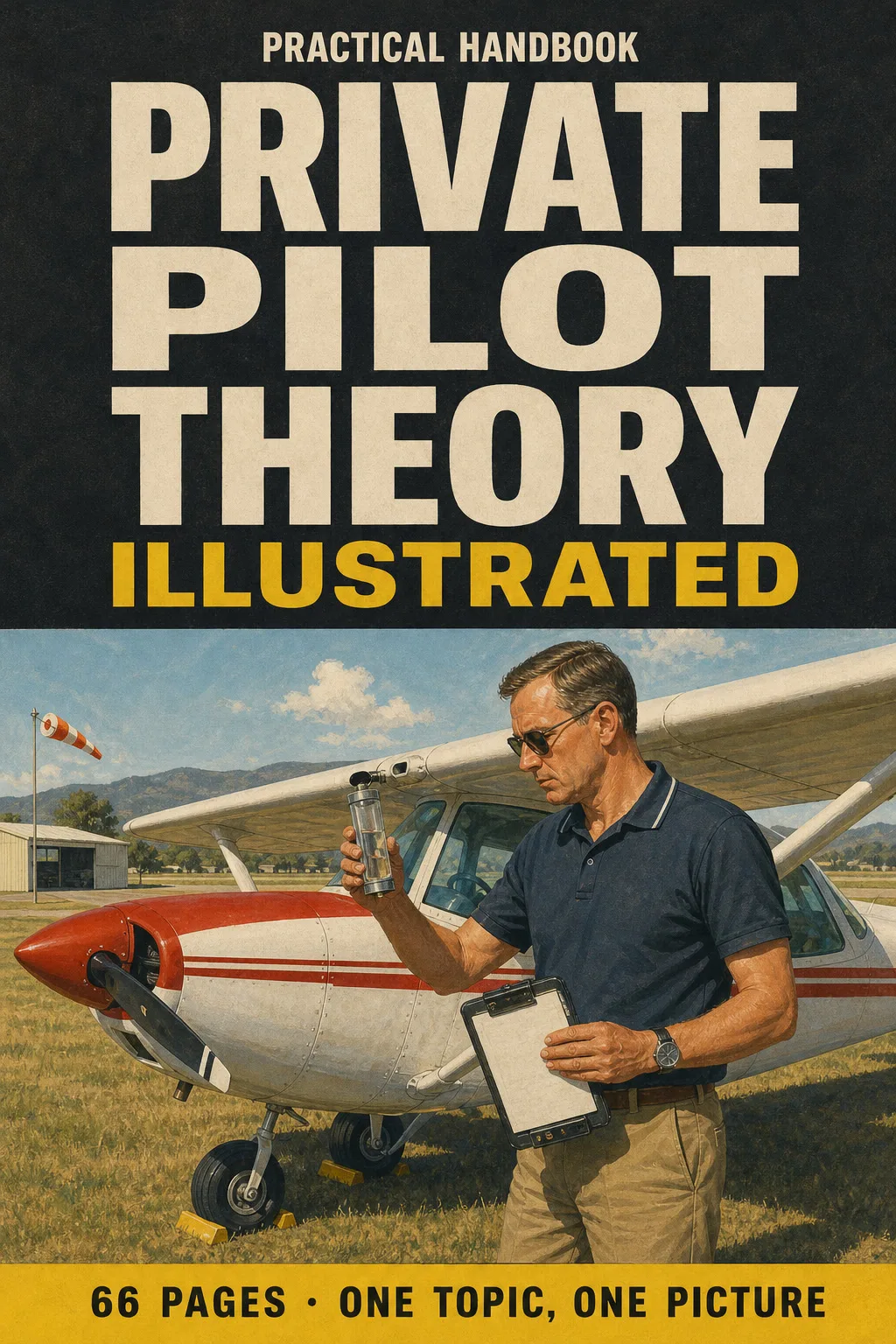
For the CASA PPL (Aeroplane) theory exam in Australia: forces of flight, engines, instruments, TAFs and METARs, the wind triangle, mass and balance, performance, airspace and radio. Every topic has its own page: the drawing first, then what you need to remember. 66 illustrated pages.

START STUDYING THIS WAY

🔒 Secure checkout · PDF by email · 30-day guarantee

Every topic, its own pageEach rule and calculation drawn, with the explanation beside it
66 illustrated pages9 parts, from the PPL theory exam at a glance to the exam-day checklist
Up-to-date sourcesCASA Part 61 MOS, CASR Part 91 and AIP Australia
PDF by emailFormat

Look Inside the Book

Every page has one big drawing and a box with the numbers and steps you need to know:

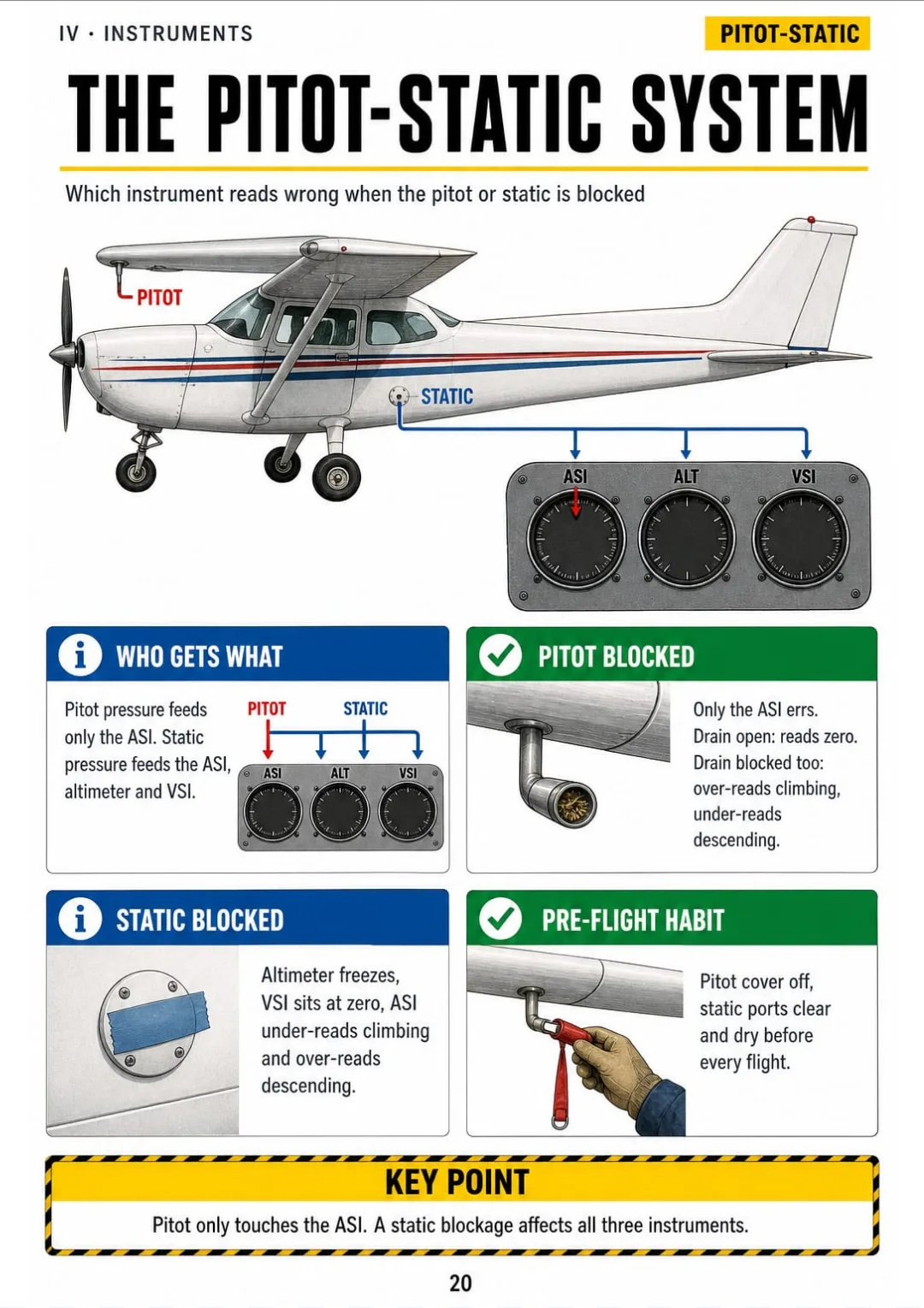
Pitot feeds the ASI only; static feeds ASI, altimeter and VSI.
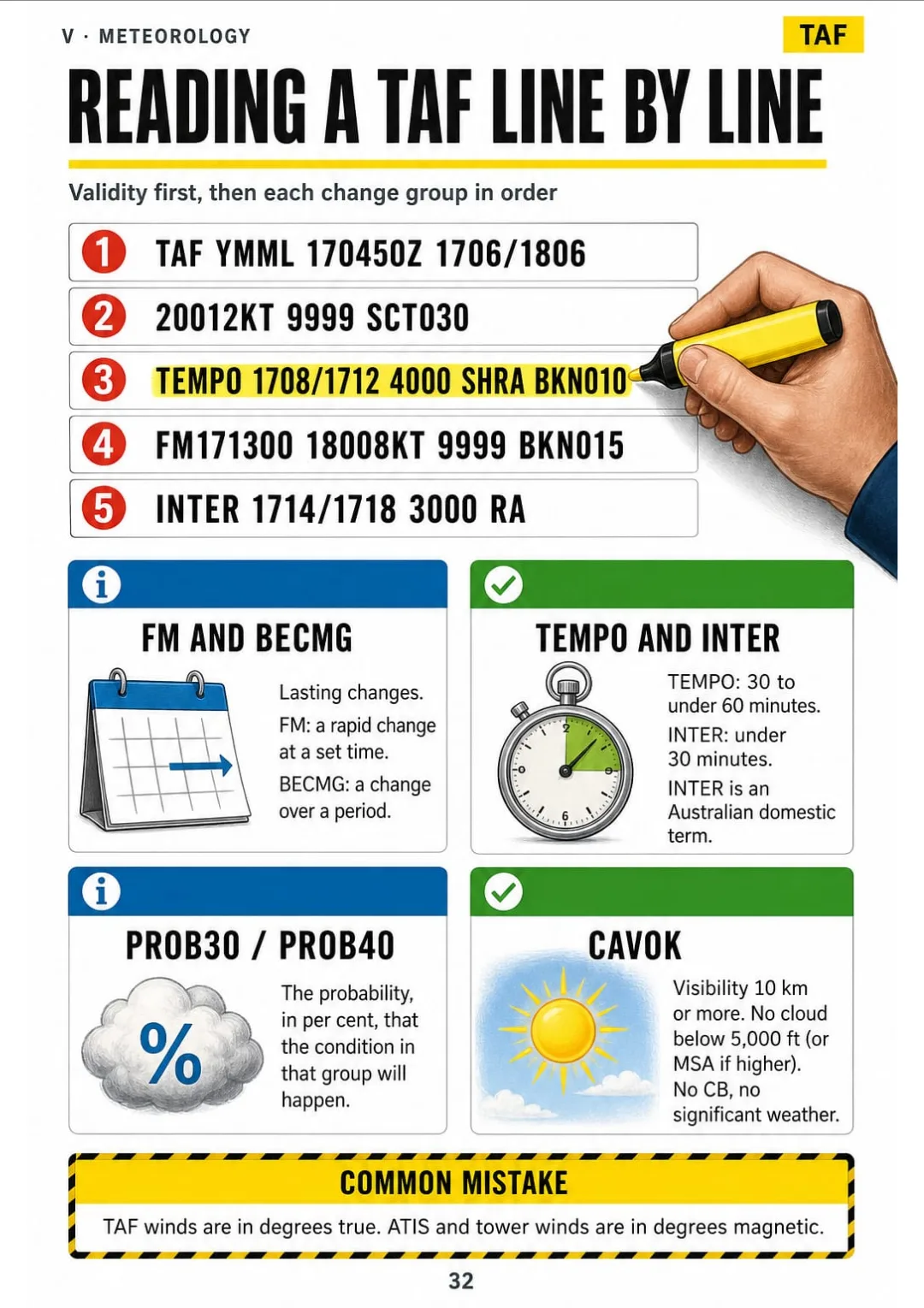
Validity, FM, BECMG, TEMPO, INTER and PROB decoded on one sample TAF, plus what CAVOK means.
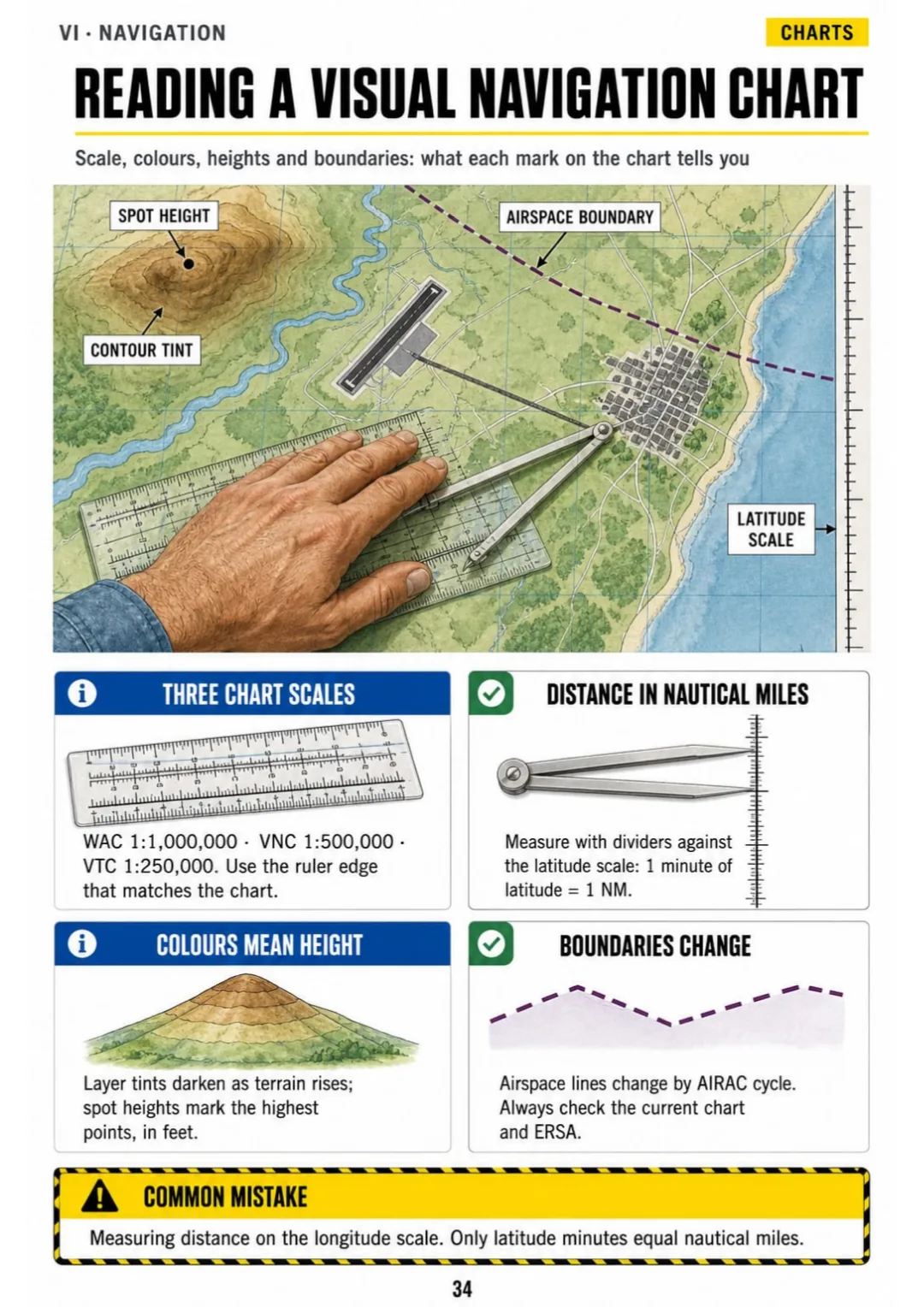
1 minute of latitude = 1 NM: measure every track on the side scale.
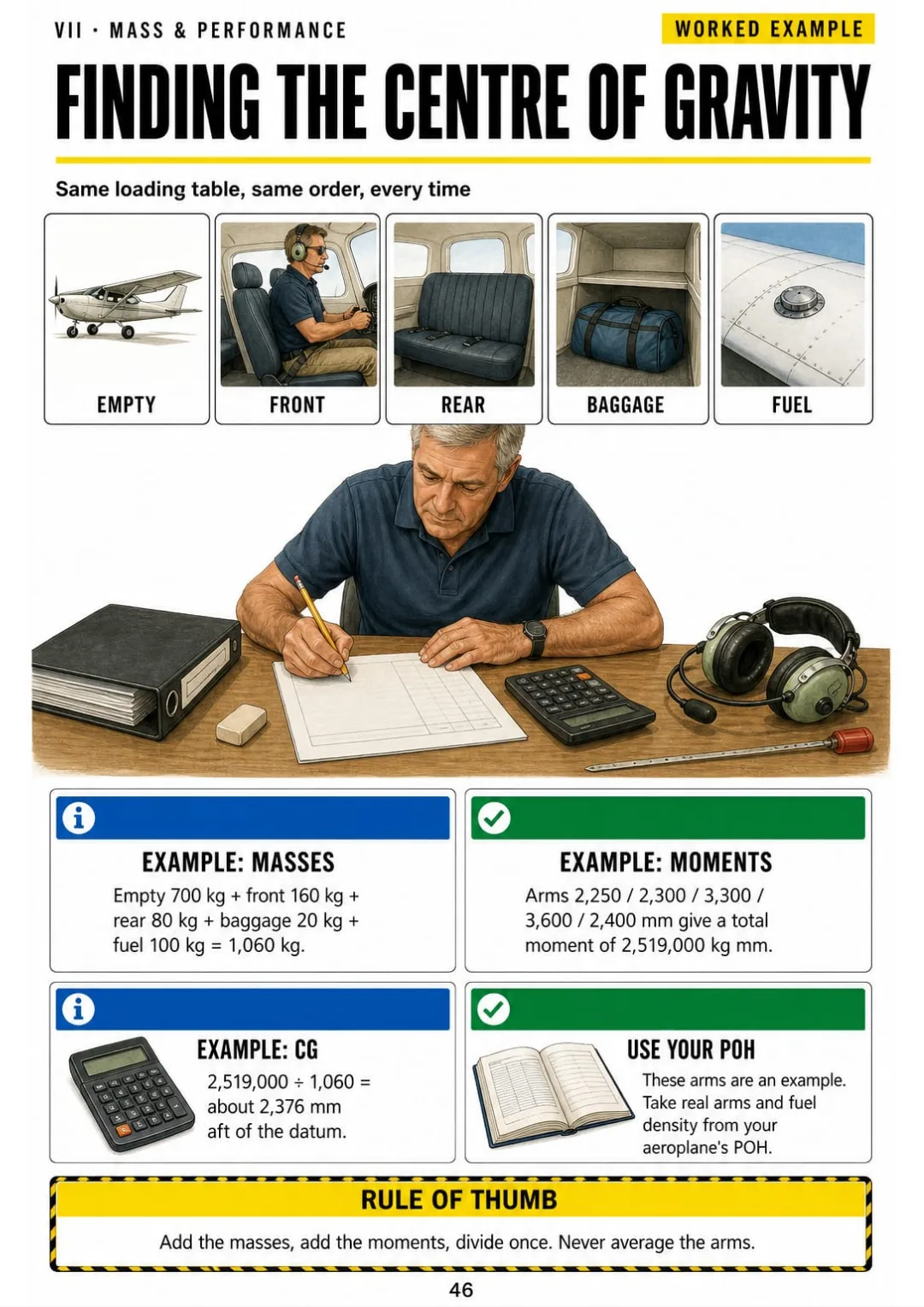
Worked four-seater example: 1,060 kg, CG about 2,376 mm aft of datum.
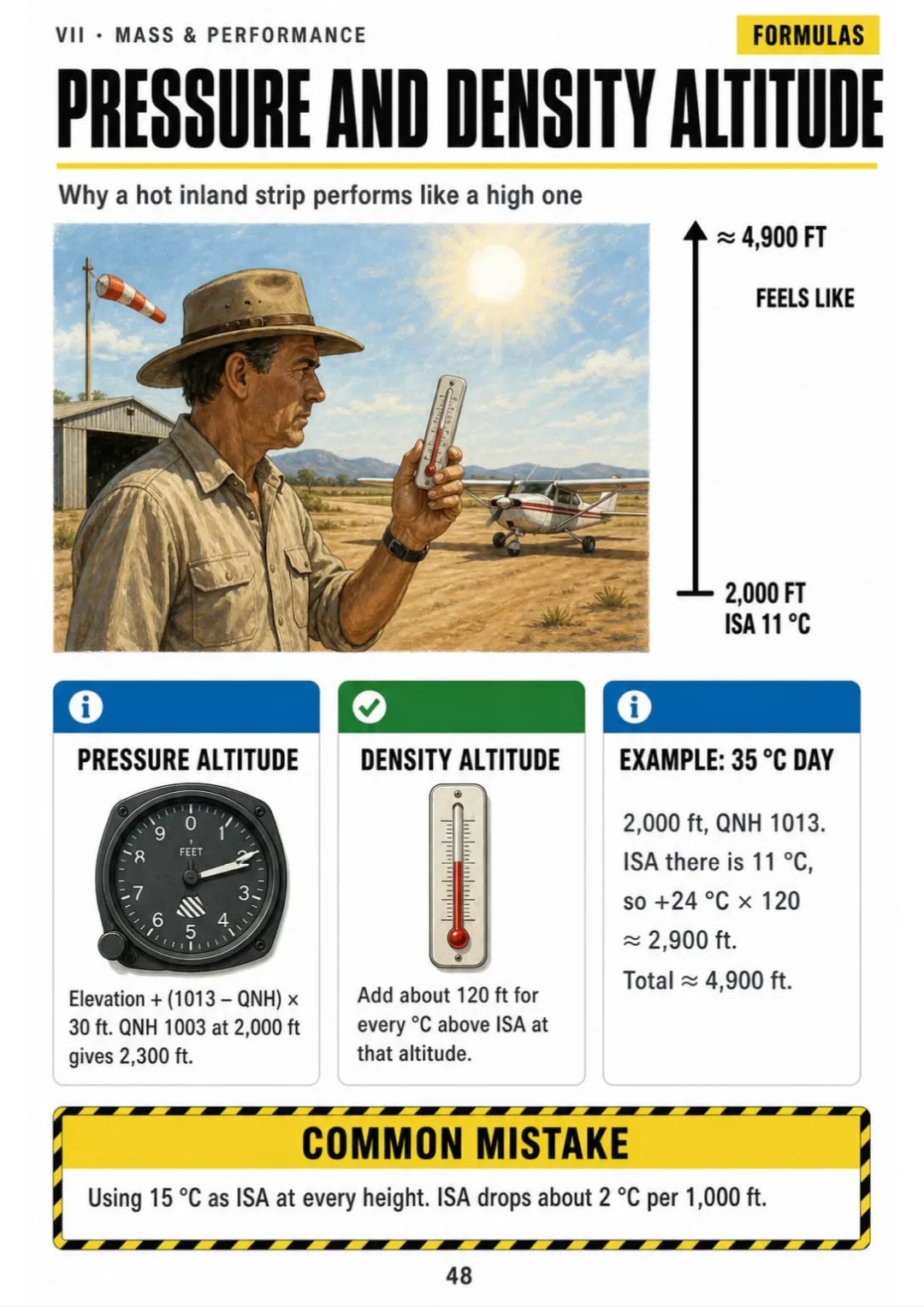
PA = elevation + (1013 − QNH) × 30; DA adds ~120 ft per °C above ISA.
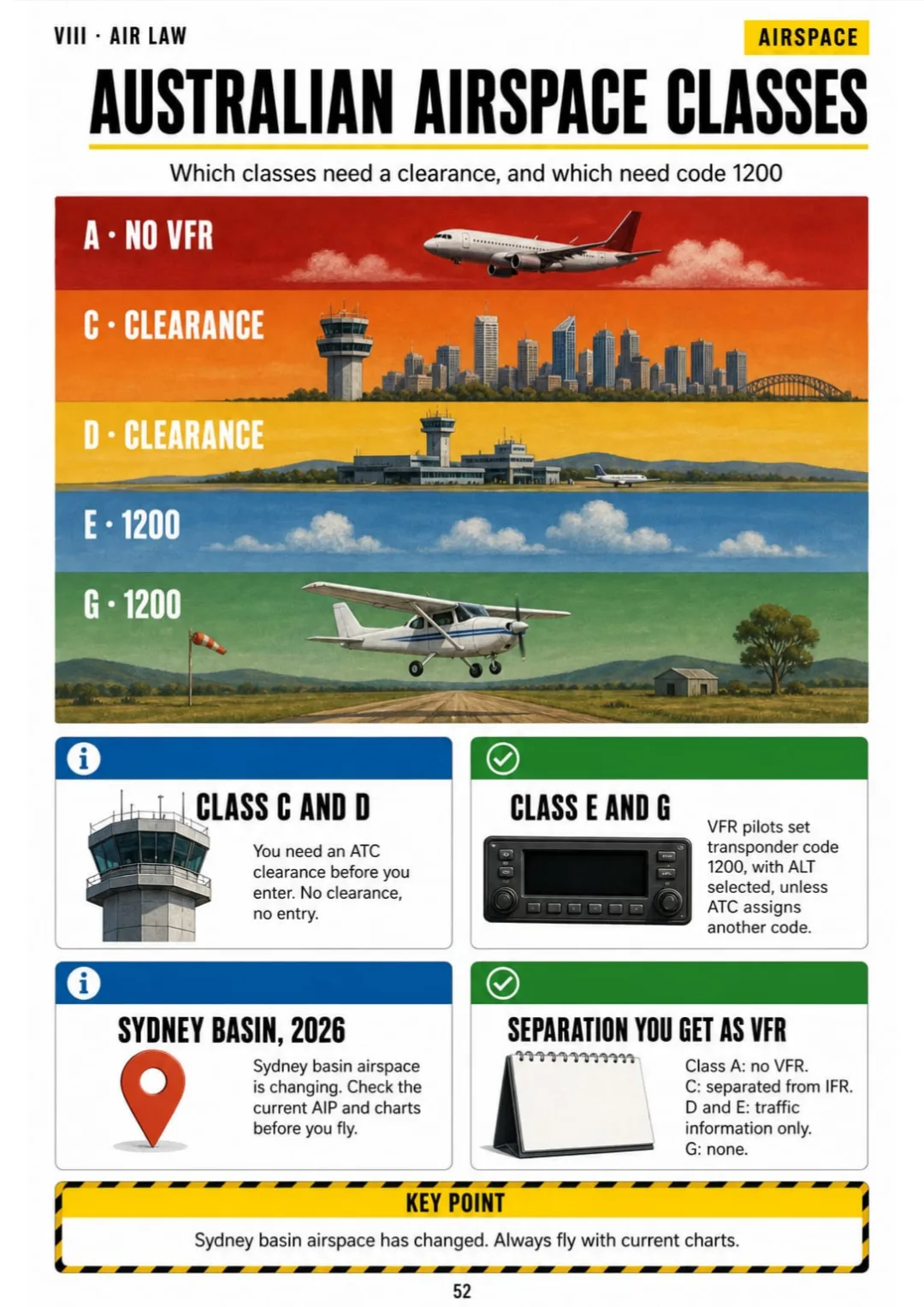
Class C and D need a clearance; in E and G VFR pilots squawk 1200.
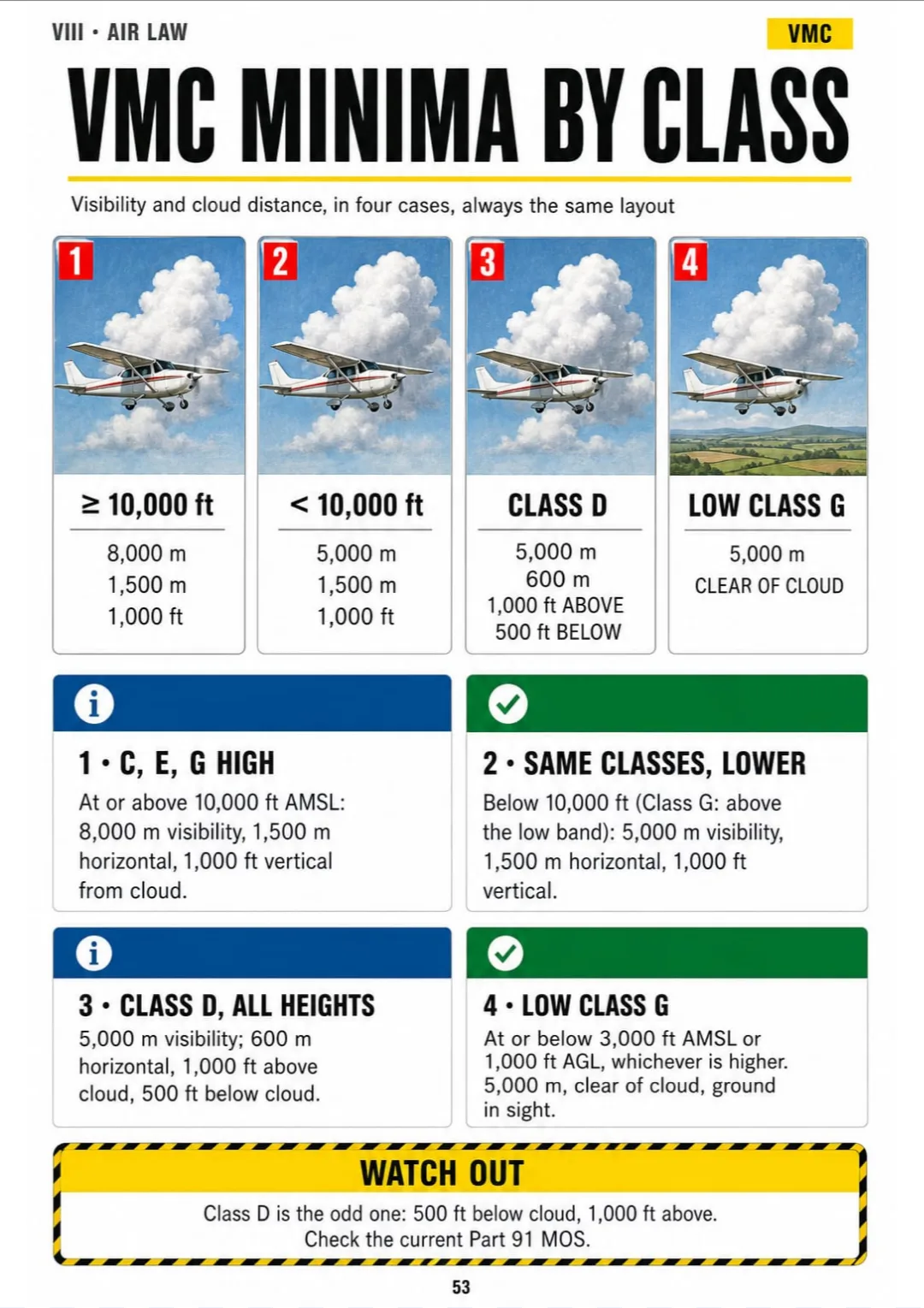
Below 10,000 ft: 5,000 m visibility, 1,500 m and 1,000 ft from cloud; Class D 600 m, 1,000 ft above, 500 ft below.
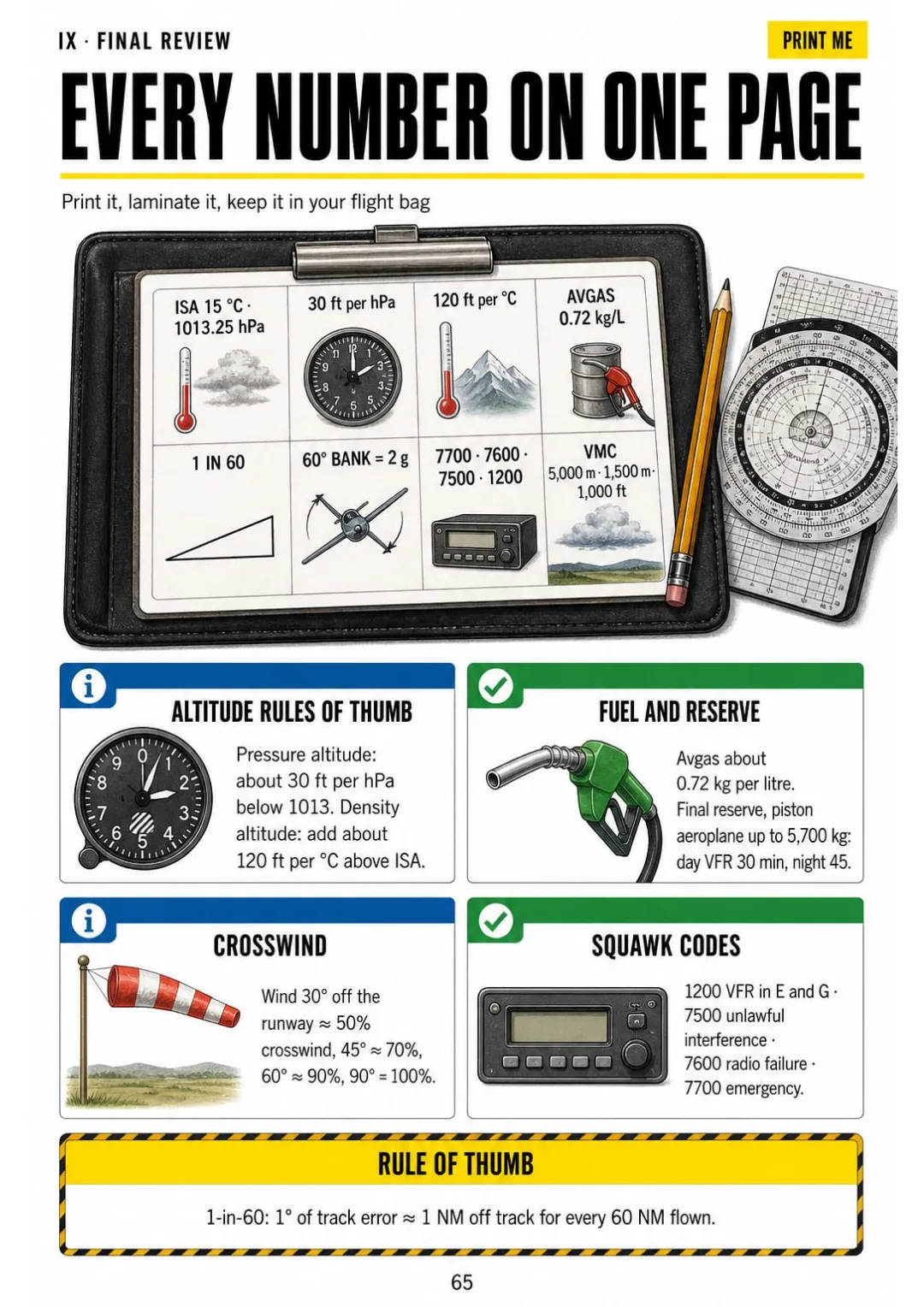
ISA, 30 ft/hPa, 0.72 kg/L, 1-in-60, squawks and VMC on one page

Swipe to see more →

These are real pages from the book. The table of contents is the full one: 9 parts and 62 topics.

The Problem Isn't You. It's How It Was Explained to You.

You're at the briefing table with a nav log: TAS 105 knots, wind 270 at 20, track 360 true. Your instructor slides it across and waits for your heading and groundspeed.

Your textbook covers the wind triangle in pages of vectors and long paragraphs. You read it at night after work, and by Saturday morning it's all a blur.

1 minute of latitude = 1 NM: measure every track on the side scale.

In this book the wind triangle is one page, built line by line: the track first, then the wind arrow, then the TAS line closing the triangle. Heading 349°T, groundspeed 103 knots, and you can see where each number comes from.

The same goes for reading a TAF, finding the centre of gravity, density altitude and VMC minima by class: each one has its own page.

Next time the nav log lands in front of you, you build the triangle in the same order and work it out without opening the textbook.

COMPARE FOR YOURSELF

The Same Topic, Two Ways to Study It

THIS
  • The textbook: line after line of text
  • TAF change groups explained only in words
  • You walk into the exam still unsure
A Terminal Aerodrome Forecast (TAF) is issued for a specified period of validity, indicated in the header group by the day and hour of commencement and expiry in UTC. Significant changes within the validity period are introduced by change indicators: FM denotes a rapid change commencing at the stated time, after which the preceding conditions are superseded; BECMG denotes a gradual change over a stated interval; TEMPO and INTER denote temporary or intermittent fluctuations of differing durations, while PROB30 and PROB40 express the percentage probability of occurrence.
FOR THIS
  • A sample TAF decoded in one drawing
  • FM, BECMG, TEMPO, INTER and PROB in one box
  • You see it and it makes sense
Validity, FM, BECMG, TEMPO, INTER and PROB decoded on one sample TAF, plus what CAVOK means.
CONTENTS

Take a Look at the 9 Parts and 62 Topics

Before you start, principles of flight, engines and systems, flight instruments, meteorology, navigation and flight planning, mass, balance and performance, air law, airspace and radio, and human factors with a final review: 66 pages, all illustrated.

IBefore You Start · pp. 5-7
  1. The PPL Theory Exam at a Glance
  2. From RPL to PPL: What's New
  3. How to Use This Book
IIPrinciples of Flight · pp. 8-14
  1. The Four Forces, Seen From the Side
  2. How a Wing Makes Lift
  3. The Stall Is About Angle, Not Speed
  4. Turns and Load Factor
  5. Drag: Induced vs Parasite
  6. The Three Axes and Stability
  7. Flaps, Trim and Adverse Yaw
IIIEngines and Systems · pp. 15-19
  1. The Four-Stroke Cycle
  2. Dual Magnetos and the Mag Check
  3. Carburettor Icing
  4. Mixture and Avgas
  5. Electrical System and Vacuum Pump
IVFlight Instruments · pp. 20-24
  1. The Pitot-Static System
  2. ASI Colour Arcs and IAS vs TAS
  3. The Altimeter and QNH
  4. The Gyro Instruments
  5. Compass Errors in the Southern Hemisphere
VMeteorology · pp. 25-33
  1. The Standard Atmosphere
  2. Pressure Systems and Wind
  3. Clouds and Stability
  4. Thunderstorms
  5. Fog, Mist and Visibility
  6. Fronts, Troughs and Local Winds
  7. Reading a METAR and SPECI
  8. Reading a TAF Line by Line
  9. The Graphical Area Forecast and Warnings
VINavigation and Flight Planning · pp. 34-44
  1. Reading a Visual Navigation Chart
  2. True, Magnetic and Compass
  3. The Wind Triangle, Line by Line
  4. Using the Flight Computer
  5. Time, Distance and Groundspeed
  6. The 1-in-60 Rule and Track Corrections
  7. Planning Fuel the Same Way Every Time
  8. Filling In the Flight Plan Log
  9. VFR Cruising Levels and Lowest Safe Altitude
  10. Alternates and Holding Fuel
  11. Lost Procedure and Diversion
VIIMass, Balance and Performance · pp. 45-51
  1. Arm, Moment and Datum
  2. Finding the Centre of Gravity
  3. Checking the CG Envelope
  4. Pressure and Density Altitude
  5. Take-Off Distance From the Chart
  6. Landing Distance and Crosswind
  7. Climb, Cruise and Endurance
VIIIAir Law, Airspace and Radio · pp. 52-60
  1. Australian Airspace Classes
  2. VMC Minima by Class
  3. Restricted, Prohibited and Danger Areas
  4. The Circuit at a Non-Towered Aerodrome
  5. Entering Controlled Airspace
  6. Radio Phraseology and the Phonetic Alphabet
  7. Emergencies: Mayday, Pan-Pan and Squawk Codes
  8. Licences, Medicals and Recent Experience
  9. Documents, Pre-Flight and ERSA
IXHuman Factors and Final Review · pp. 61-66
  1. IMSAFE: Fit to Fly?
  2. Hypoxia, Spatial Disorientation and the Eyes
  3. Threat and Error Management
  4. Forced Landing: The Same Order Every Time
  5. Formula and Number Sheet
  6. Exam-Day Checklist

One Page, One Topic, All Clear

Think of it this way:

It's Saturday at the aero club, the nav is planned for ten o'clock, and the TAF for your destination has a TEMPO line you're not sure about.

You open the book to the TAF page and see one sample forecast decoded group by group: validity, FM, BECMG, TEMPO, INTER and PROB, plus what CAVOK means.

PA = elevation + (1013 − QNH) × 30; DA adds ~120 ft per °C above ISA.

The same with the wind triangle, the centre of gravity, density altitude, airspace classes and radio calls: each one on its own page, drawn.

Private Pilot Theory Illustrated is 9 parts and 62 topics, all drawn, with a formula and number sheet and an exam-day checklist at the end.

What you see drawn, you don't have to memorize.

What's Inside Private Pilot Theory Illustrated:

Ipp. 5-7

Before You Start

How the PPL theory exam works, what's new after the RPL and how to use each page.

IIpp. 8-14

Principles of Flight

The four forces, how a wing makes lift, the stall, turns and load factor, drag, stability, flaps and trim.

IIIpp. 15-19

Engines and Systems

The four-stroke cycle, dual magnetos and the mag check, carburettor icing, mixture and avgas, electrics and the vacuum pump.

IVpp. 20-24

Flight Instruments

The pitot-static system, ASI colour arcs and IAS vs TAS, the altimeter and QNH, gyro instruments and compass errors in the southern hemisphere.

Vpp. 25-33

Meteorology

The standard atmosphere, pressure and wind, clouds, thunderstorms, fog, fronts and local winds, and how to read a METAR, a TAF and the GAF.

VIpp. 34-44

Navigation and Flight Planning

The chart, true vs magnetic, the wind triangle, the flight computer, the 1-in-60 rule, fuel planning, the flight plan log, cruising levels, alternates and diversions: so you fill in a nav log in the same order every time.

VIIpp. 45-51

Mass, Balance and Performance

Arm, moment and datum, the centre of gravity and its envelope, pressure and density altitude, take-off and landing distances, climb, cruise and endurance: so you can tell from the loading sheet whether the CG is in limits.

VIIIpp. 52-60

Air Law, Airspace and Radio

Airspace classes, VMC minima, restricted areas, the non-towered circuit, entering controlled airspace, radio phraseology, emergencies, licences and ERSA.

IXpp. 61-66

Human Factors and Final Review

IMSAFE, hypoxia and disorientation, threat and error management, the forced landing, the number sheet and the exam-day checklist.

At the end of the book: A formula and number sheet with every number on one page, plus an exam-day checklist.

Plus: 2 Free Books

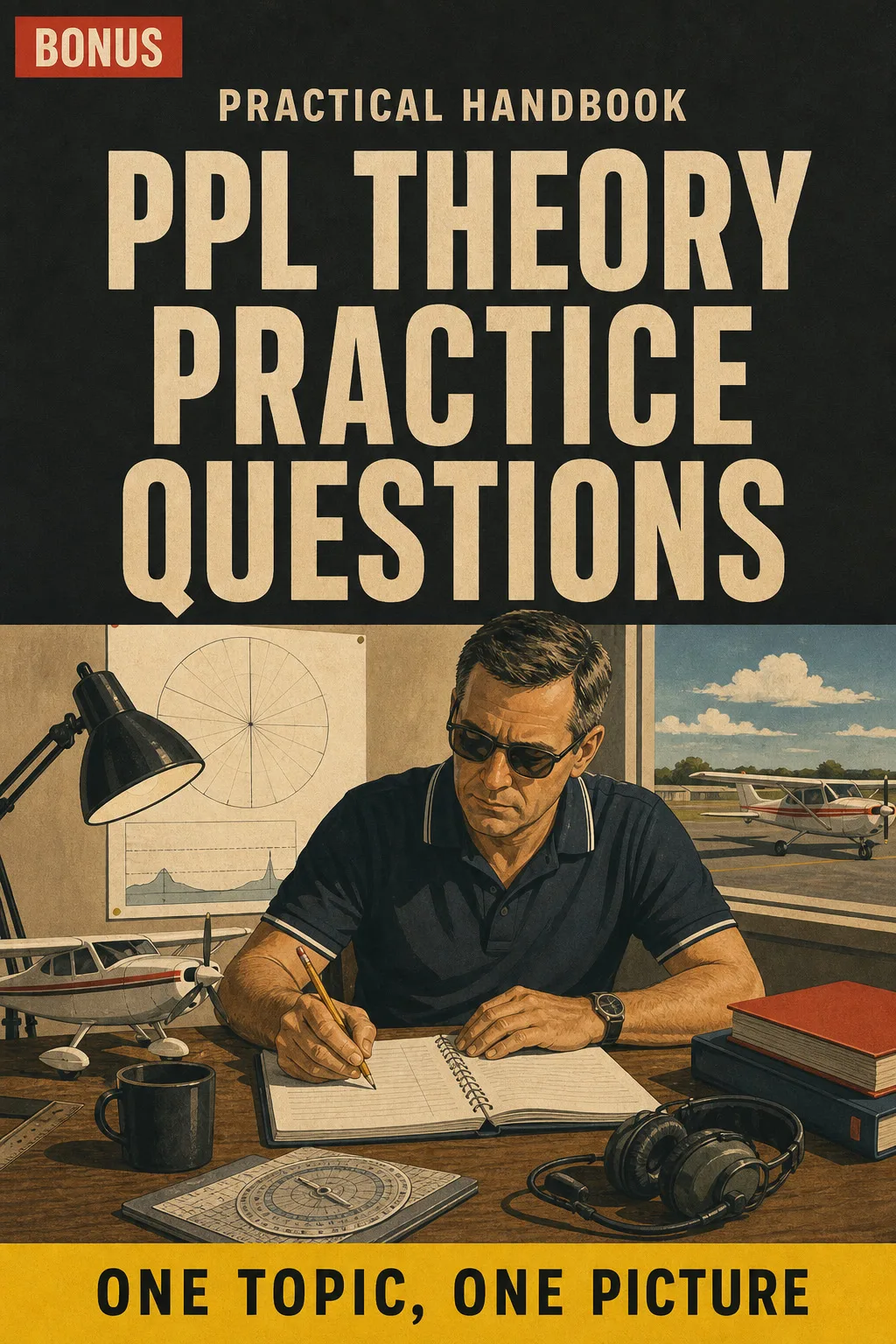
PPL Theory Practice Questions

BONUS 1: «PPL Theory Practice Questions»

Value on its own: US$ 17.90

Exam-style multiple choice questions on every topic, with the answer explained, so you find your gaps before exam day instead of on it.

The 15 Most Common PPL Theory Mistakes

BONUS 2: «The 15 Most Common PPL Theory Mistakes»

Value on its own: US$ 14.90

Each frequent mistake drawn before and after (true vs magnetic, arm vs moment, a TAF read the wrong way round) so you stop repeating it.

Private Pilot Theory Illustrated with 2 Free Books

  • Private Pilot Theory Illustrated: 66 illustrated pagesUS$ 63
  • BONUS 1: PPL Theory Practice QuestionsUS$ 17.90
  • BONUS 2: The 15 Most Common PPL Theory MistakesUS$ 14.90
  • High-resolution PDF to printIncluded
Total value US$ 95.80
YOUR PRICE:
US$ 27
You save US$ 68.80
YES, I WANT PRIVATE PILOT THEORY ILLUSTRATED FOR US$ 27

📄 This is a digital PDF book sent to your email: nothing is printed or shipped.

Secure purchaseEncrypted payment30-day guarantee

PDF by email: We email you Private Pilot Theory Illustrated as a PDF, together with the two free books. It's a single payment: no installments, no extra charges.

Who This Book Is For

You're working through the PPL theory

You're working through the PPL theory

One topic per page, so you can study one at a time in the evening after work and see the whole thing at a glance.

Your PPL theory exam is coming up

Your PPL theory exam is coming up

Every calculation in the same order, plus the formula and number sheet, to revise the lot before exam day.

You already fly with an RPL

You already fly with an RPL

Navigation, airspace and flight planning drawn step by step, with worked examples in knots and nautical miles.

Everything You Get Today

US$ 95.80US$ 27
YES, I WANT PRIVATE PILOT THEORY ILLUSTRATED FOR US$ 27

📄 This is a digital PDF book sent to your email: nothing is printed or shipped.

30DAYS
GUARANTEE

30-Day Guarantee

Try Private Pilot Theory Illustrated for 30 days, bonus books included.

We refund everything if the file won't open, if the book isn't what you see here, if you were charged twice or if the email doesn't arrive. Just email us.

You pay once. No subscriptions.

Frequently Asked Questions

Is it for me if I'm studying for the PPL around a full-time job?

Yes. Each topic fits on one page, so you can study one at a time in the evening and see it all at a glance. You don't need any theory beforehand: Part I starts with how the exam works. It also works if you already hold an RPL and are adding navigation, airspace and flight planning.

Where does the content come from?

From current CASA material for the PPL (Aeroplane): the Part 61 Manual of Standards, CASR Part 91 and its Manual of Standards, the AIP Australia including ERSA, and the Bureau of Meteorology aviation guides. Examples use metric units, knots and nautical miles, and each rule is flagged to check against the current version.

Is it official material?

No. It's an independent illustrated study book, not affiliated with or endorsed by CASA, Airservices Australia or the Bureau of Meteorology. It doesn't come with a certificate and doesn't count towards your licence: it's for studying, and you still sit the CASA theory exam.

Does it replace my flight school or instructor?

No. It's theory study material. It doesn't replace flight training, your instructor or the flight manual (AFM/POH) of your aeroplane.

Are the practice questions the ones in the exam?

No. They're written for this book in an exam style, to help you find your gaps. They aren't official exam questions.

When and how do I get it?

The book and the 2 bonus books arrive as PDFs by email, at the address you enter at checkout.

Do I have to pay every month?

No. It's a single payment, with no subscription.

Can I have it on paper?

Yes. The PDF is made to print, at home or at a print shop, so you can take it to the aero club.

How does the refund work?

You have 30 days. We refund everything if the file won't open, if the book isn't what you see on this page, if you were charged twice or if the email doesn't arrive: just email us.

Before You Close This Page

No more rereading and nothing sticking.

The wind triangle, drawn, and done.

You walk into the exam knowing where everything is.

Drawings make studying faster.

The book is right below.

One-time payment: US$ 27 · Guarantee: 30 days · PDF by email

YES, I WANT PRIVATE PILOT THEORY ILLUSTRATED FOR US$ 27

📄 This is a digital PDF book sent to your email: nothing is printed or shipped.